Career Paths
Since its establishment as the first nuclear engineering department in Korea in 1958, Hanyang University's Department of Nuclear Engineering has produced the most graduates among Korean universities (as of January 2015: 2,224 bachelor's, 335 master's, and 79 doctoral degrees), playing a leading role across the entire nuclear industry.
Approximately 500 graduates have entered major nuclear-related organizations including Korea Hydro & Nuclear Power (KHNP), Korea Atomic Energy Research Institute (KAERI), Korea Nuclear Fuel Co. (KNFC), and Korea Institute of Nuclear Safety (KINS). Employment rates are exceptionally high in fields directly and indirectly related to the major, including nuclear-related government agencies, international organizations, academia, and research institutions. In recent years, there has been a growing trend of graduate students entering the medical field for radiation-related positions.
Since achieving a 100% employment rate in 2004, the department has maintained consistently high employment rates, approaching 90% through 2014. With Korea's nuclear technology transforming into an export industry through the UAE nuclear power plant contract (December 27, 2009), the Jordan research reactor export contract (March 30, 2010), and the Netherlands research reactor contract (November 3, 2014), a shortage of advanced nuclear professionals is anticipated, making career prospects bright.
Furthermore, as society moves toward specialized division-of-labor industrial structures rather than large-conglomerate-centered systems, entrepreneurial opportunities are also expanding. Following the Fukushima accident, with the domestic and international nuclear field revitalizing, career opportunities in the major field are expected to grow even further.
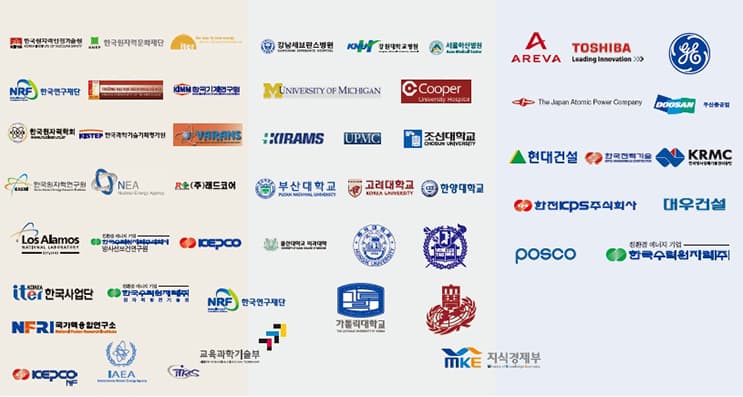
| Research Sector | Academia | Industry |
|---|---|---|
| KAERI, KINS, KINAC, KORAD, etc. | Universities, National labs | KHNP, KEPCO, KNFC, Doosan Enerbility, etc. |